
How to write more
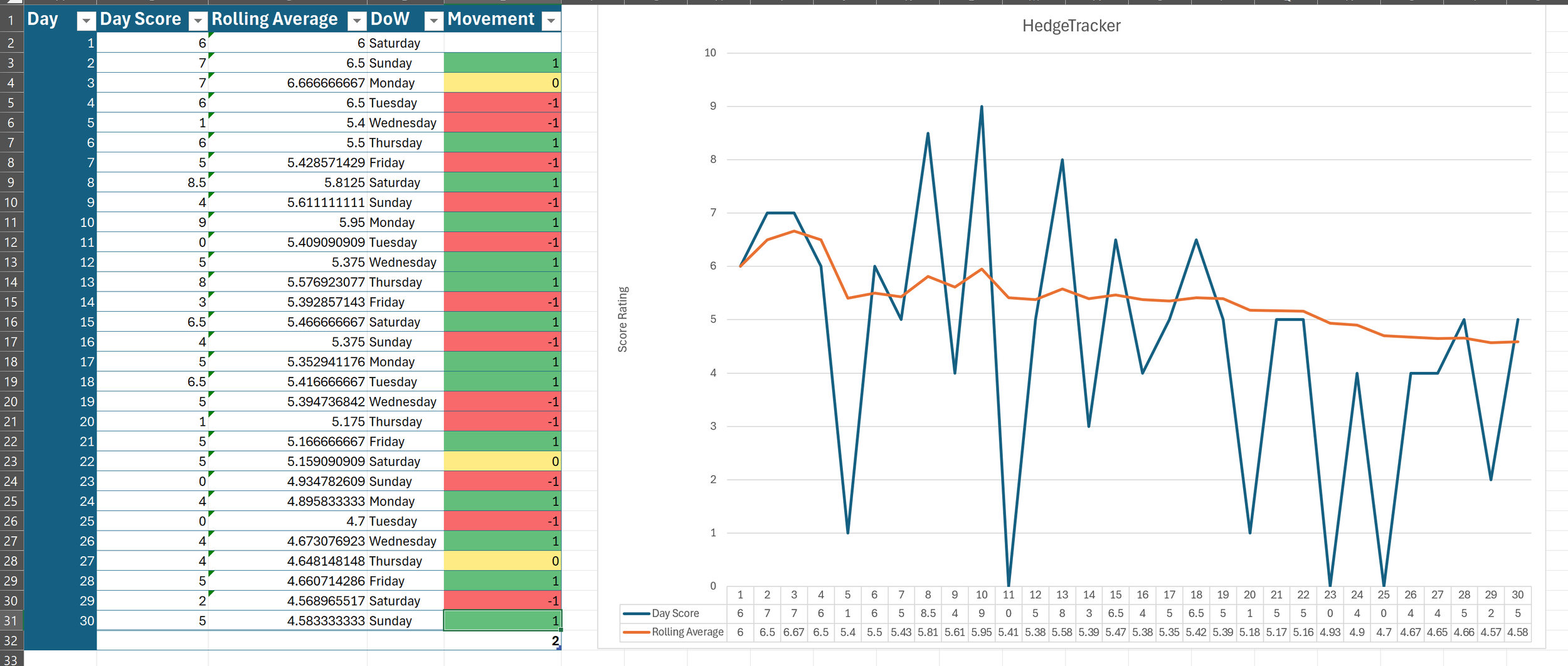
A graph of John Hedge’s daily writing statistics from the November Writing Challenge.
Every November, the Playhouse hosts a writing challenge. We gather a group of like-minded horror writers onto our Discord server and we challenge ourselves to write every day. After a challenging personal period where I’ve not been writing, I (Hedge) led from the front. Attempting to complete the first draft of a short Modern Cthulhu campaign titled ‘The Tontine’. Overall, I fell short of my goal of 30,000+ words in a month, landing somewhere in the region of 25,000 words. It became clear fairly early on that I wasn’t going to hit my goal, but I opted for a landing amongst the stars approach.
Starting with 26 people, around 10 managed to complete the challenge of posting their progress every day. Even if that progress was nothing.
Throughout the month, I diligently reported a daily update of how well my writing had gone. It showed some interesting patterns and I’m making the, slightly intimidating, choice to bear my soul and my struggles publicly so that other creatives can get a glimpse into what an, ostensibly disciplined, part-time writer can really achieve.
The blue line of the graph is my self reported success level out of 10 every day. The red is the cumulative average. I took a solid morning session of around 1000 words to be a 5/10 score. I imagined a 10/10 being a perfect day where I got two long sessions in. You can see that I only got close to that a few times.
The start of the challenge went really well. With a general trend of me being productive every other day. But by the end of the month, my reporting average had dropped all the way down to 4.6. Real life got in the way and I needed to step back from writing and deal with the realities of being a human being in a complex world. It’s interesting to note that after I realised that I needed to step back, I took the 23-25th to be a bit slower, giving me a second wind that is sustaining me into December.
Looking at taking lessons from this, one option would be to lean into the up and down pattern. Expect to be creatively writing every other day, and then choose to use the non-writing days for research, layout, editing and other tasks that form part of the discipline. (Also, to do things related to my real job and life)
Another approach is simply to be reactive, lean into the days when I feel good and want to write, and back off on days when I don’t. This very reactive approach is how I have always chosen to write. Intense periods of obsession, followed by long idle periods. However, there’s one major difference between this year and previous years. This year, I am living full-time with my lovely wife and am trying to balance a normal life whilst also writing regularly. The ability to obsess for a month then do nothing for a month is, at best, unpredictable, and doesn’t really mesh well with daily responsibilities. Also, it would drive her crazy.
So instead, I’m working to find a balanced schedule. My new rule is that I write in the mornings. I know I can have periods of light obsession while I get a draft over the line, but also that I can pivot to other projects if I’m not in the mood. I aim to make the times I’m at my desk fairly predictable, even as my workload bounces up and down. Some days I’ll write solidly for 4 hours. Others, I’ll doss around or play a game. But either way, I create room for the rest of my life, whilst also finding ways to make the writing time sacred.
But what lessons can you, the viewer, take from looking at this graph and the November Challenge in general?
Most people aren’t writing every day.
A lot of creatives end up feeling guilty if they can’t squeeze out a solid section of writing every day. While every writer is different, I don’t think anyone in the challenge was able to be productive every single day. This is normal. The golden rule is to know that you have good and bad days and you must accept them both.
The best response to a bad day is to have a good day
The most common days for us to lose people during the challenge was day 2 and about day 9. Those who stepped out straight away likely found that day 2 didn’t go as well as day 1. Discovering it was all too overwhelming, they quit before getting too deep into the challenge. That’s normal. Not everyone has the freedom, time, or frankly the right temperament, to write everyday. The group that we lost a little later on likely had a similar problem. After a week of working hard, they probably had their first really bad day. Or they forgot to check in. Their streak was broken, anxiety gripped them tightly, and so they quietly quit.
Knowing that most people give up because of just one bad day, we can learn from that. Everyone is going to have bad days. The best response to having had one day is to make sure that we have a good day the day after. Getting us back on track. You can see that my most common response to a bad day was to follow it up with a good day. It’s through that simple response that we learn to persevere.
It’s dangerous to go alone
It’s not surprising that the people that managed to complete the challenge were the same ones hanging around the Discord, chatting to each other every day. By creating community, they gave themselves a reason to come back and engage. The notification pings giving a staccato reminder that they needed to get a little bit done. One participant saying that he often sat down for 5 minutes just to say he’d managed something and often found those 5 minutes snowballing into an hour’s productivity. If you want to write but are struggling, nothing quite beats having a community to rely on.
If you’d like to join a writing community, the Playhouse will be hosting Writing Groups in 2026. You can apply to join below: